
• Link to X
  • Link to Facebook
  • Link to Instagram
  • Link to LinkedIn
  • FIND A UFE SPECIALIST
  • EVENTS
  • Search
ask4UFE
  • All About Fibroids
    • Symptoms
    • Types of Fibroids
  • Choosing UFE
    • UFE Treatment
    • Why embosphere?
    • Key Advantages
    • Risks
  • Take Charge
    • Find out If You Are a Candidate
    • Questions for Your Doctor
    • What is an Interventional Radiologist?
  • Hear From Patients
  • News
    • Blog
    • Videos
  • Find A UFE Specialist
  • Events
  • Click to open the search input field Click to open the search input field Search
  • Menu Menu
30 April 2019
New Pain Management Protocol Decreases Need for Opioids Among UFE Patients
Alicia Armeli

Up to half of women with uterine fibroids will seek treatment for bothersome symptoms like heavy periods, severe bloating, and painful sex.1 One such treatment is uterine fibroid embolization (UFE). An effective nonsurgical approach, UFE has shown to offer relief to nearly nine out of ten women treated.2

Despite these advantages, a downside to UFE is reported pelvic pain and cramping that may follow the procedure. Typically lasting up to 12 hours, this post-UFE pain may require opioid medication, also called narcotics, to provide relief.3 A team of researchers at Pennsylvania Hospital in Philadelphia, PA, found that performing UFE from the wrist—an approach called transradial access—combined with a nerve block targeting nerves in the lower back that supply sensation to the uterus and trigger post-UFE pain may reduce the need for opioids after the procedure.4

The study involved 79 women who underwent the combined treatment.4 Results showed that transradial UFE had a 97% technical success rate. The nerve block—which targeted the superior hypogastric nerve plexus—was successful in all but one patient. Of these 78 patients, nearly half (49%) didn’t require opioid medications following the procedure. The researchers also found that by using this protocol, patients were discharged home in about two and a half hours. Six patients returned five days later, needing treatment for uncontrolled pain or nausea.

UFE has traditionally been performed through the femoral artery in the groin area, but now—with a transradial option—UFE can access fibroids from the radial artery in the wrist. Doctors called interventional radiologists begin by making a nick in the wrist and inserting a slim catheter into the radial artery. Under the guidance of magnetic resonance imaging (MRI), the catheter is then threaded into the uterine vessels that supply fibroids with blood. Tiny particles are injected, plugging these vessels. Without a blood supply, fibroids begin to shrink and die, and symptoms start to improve.

Using the wrist to perform UFE has been shown to boost patient comfort immediately after the procedure.5 Patients have reported that transradial advantages such as being able to sit up in a comfortable position and get out of bed to use the toilet after the procedure have improved the overall patient experience.5

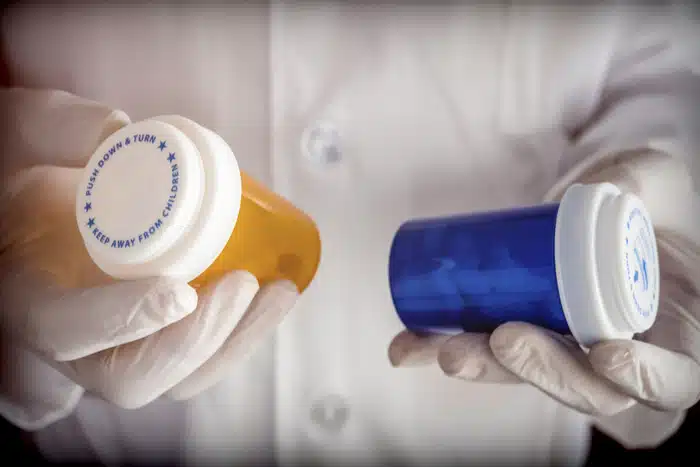
UFE pain management protocols vary but involve medication, typically opioids, administered intravenously (IV), through patches, and/or orally. Opioids work by blocking pain signals sent from the body through the spinal cord to the brain.6 In contrast, a nerve block is a regional anesthesia. Using specialized X-ray equipment, a small needle is used to inject pain medication near a cluster of nerves along the spinal cord, numbing only the part of the body affected by pain.7 Research has shown that complications are rare.3

This combined approach to UFE has many patient advantages. But as with any medical procedure, it’s important to talk to your doctor about whether you’d make a good candidate for this line of treatment and about any risks involved.

REFERENCES

  1. Soliman, A. M., Yang, H., Du, E. X., et al. (2015). The direct and indirect costs of uterine fibroids tumors: A systematic review of the literature between 2000 and 2013. Am J Obstet Gynecol, Aug;213(2):141-160.
  2. Silberzweig, J. E., Powell, D. K., Matsumoto, A. H., et al. (2016). Management of uterine fibroids: A focus on uterine-sparing interventional techniques. Radiology, Sep;280(3):675-692.
  3. Boucher, L., Bahir, A., Yoon, J., et al. (2016). Superior hypogastric nerve block for acute pain control in uterine fibroid embolisation. J Vasc Interv Radiol, March;27(3):S285-S286.
  4. Maratto, S., Alkhatib, S., Huang, J., et al. (2018). Trans-radial uterine artery embolization with superior hypogastric nerve block: Optimizing pain control and minimizing length of stay. [Abstract]. J Vasc Interv Radiol, Apr;29(4):S184.
  5. Resnick, N. J., Kim, E., Patel, R. S., et al. (2014). Uterine artery embolization using a transradial approach: Initial experience and technique. J Vasc Interv Radiol, Mar;25(3):443-447.
  6. American Society of Anesthesiologists. (n.d). What are opioids? Retrieved from https://www.asahq.org/whensecondscount/pain-management/opioid-treatment/what-are-opioids/
  7. American Society of Regional Anesthesia and Pain Medicine. (n.d.). Regional anesthesia for surgery. Retrieved from https://www.asra.com/page/41/regional-anesthesia-for-surgery

Search Search

ARCHIVES

  • October 2023
  • September 2023
  • August 2023
  • July 2023
  • May 2023
  • April 2023
  • March 2023
  • February 2023
  • January 2023
  • December 2022
  • November 2022
  • October 2022
  • September 2022
  • July 2022
  • June 2022
  • April 2022
  • March 2022
  • February 2022
  • January 2022
  • December 2021
  • November 2021
  • October 2021
  • September 2021
  • August 2021
  • July 2021
  • June 2021
  • May 2021
  • April 2021
  • March 2021
  • November 2020
  • September 2020
  • July 2020
  • May 2020
  • March 2020
  • January 2020
  • December 2019
  • October 2019
  • August 2019
  • June 2019
  • April 2019
  • February 2019
  • December 2018
  • October 2018
  • September 2018
  • July 2018
  • June 2018
  • May 2018
  • March 2018
  • February 2018
  • January 2018
  • ALL ABOUT FIBROIDS
  • CHOOSING UFE
  • TAKE CHARGE
  • HEAR FROM PATIENTS
  • NEWS
  • EVENTS
CONTACT
email iconFind A Specialist
CONNECT WITH US

UNCOMFORTABLE WITH
A HYSTERECTOMY?

Learn about your options.

DOWNLOAD THE EBOOK arrow
  • ALL ABOUT FIBROIDS
  • Symptoms
  • Types of Fibroids
  • UFE
  • CHOOSING UFE
  • UFE Treatment
  • Key Advantages
  • Risks
CONTACT
Find A Specialist
  • TAKE CHARGE
  • Find Out if You Are a Candidate
  • Questions for Your Doctor
  • HEAR FROM PATIENTS
  • News
  • ABOUT US
CONNECT WITH US
  • Twitter
  • Facebook
  • Instagram
  • Linkedin
IN AUSTRALIA OR NEW ZEALAND?

Join us at Ask4UFE.com.au.

UNCOMFORTABLE WITH
A HYSTERECTOMY?

Learn about UFE.

DOWNLOAD THE EBOOK arrow
©2026 Merit Medical
terms of use
privacy policy
Powered By
Link to: 10 Questions You’ve Always Wanted to Ask About UFE Link to: 10 Questions You’ve Always Wanted to Ask About UFE 10 Questions You’ve Always Wanted to Ask About UFE Link to: How Much Are Your Fibroids Costing You? Link to: How Much Are Your Fibroids Costing You? How Much Are Your Fibroids Costing You?
Scroll to top Scroll to top Scroll to top

This site uses cookies. By continuing to browse the site, you are agreeing to our use of cookies.

OKLearn more

Cookie and Privacy Settings


How we use cookies

We may request cookies to be set on your device. We use cookies to let us know when you visit our websites, how you interact with us, to enrich your user experience, and to customize your relationship with our website.

Click on the different category headings to find out more. You can also change some of your preferences. Note that blocking some types of cookies may impact your experience on our websites and the services we are able to offer.

Essential Website Cookies

These cookies are strictly necessary to provide you with services available through our website and to use some of its features.

Because these cookies are strictly necessary to deliver the website, refusing them will have impact how our site functions. You always can block or delete cookies by changing your browser settings and force blocking all cookies on this website. But this will always prompt you to accept/refuse cookies when revisiting our site.

We fully respect if you want to refuse cookies but to avoid asking you again and again kindly allow us to store a cookie for that. You are free to opt out any time or opt in for other cookies to get a better experience. If you refuse cookies we will remove all set cookies in our domain.

We provide you with a list of stored cookies on your computer in our domain so you can check what we stored. Due to security reasons we are not able to show or modify cookies from other domains. You can check these in your browser security settings.

Other external services

We also use different external services like Google Webfonts, Google Maps, and external Video providers. Since these providers may collect personal data like your IP address we allow you to block them here. Please be aware that this might heavily reduce the functionality and appearance of our site. Changes will take effect once you reload the page.

Google Webfont Settings:

Google Map Settings:

Google reCaptcha Settings:

Vimeo and Youtube video embeds:

Accept settingsHide notification only
The content on the ask4UFE.com website is not intended nor recommended as a substitute for medical advice, diagnosis or treatment. Always seek the advice of a qualified physician regarding any medical questions or conditions. The use of this website is governed by the ask4UFE.com Terms of Use.